To brew Taiwanese oolong well, start with water near boiling, enough leaf for the size of your vessel and a timer you can adjust one infusion at a time. Rolled oolong needs room to open, and charcoal-roasted tea usually shows its best balance when the water is hot enough to release its body and lingering sweetness.
There is no single recipe for every oolong. A 50 g loose-leaf can brewed in a small teapot needs a different ratio from a 6-7 g sachet brewed in a 300 ml cup. This guide gives two reliable starting methods, explains how to correct a cup that is too strong or too light and shows how to re-steep the same leaves.
Quick answer: temperature, leaf and time
- Water: fresh water at 95-100°C for TEAGRAPHY's charcoal-roasted oolongs.
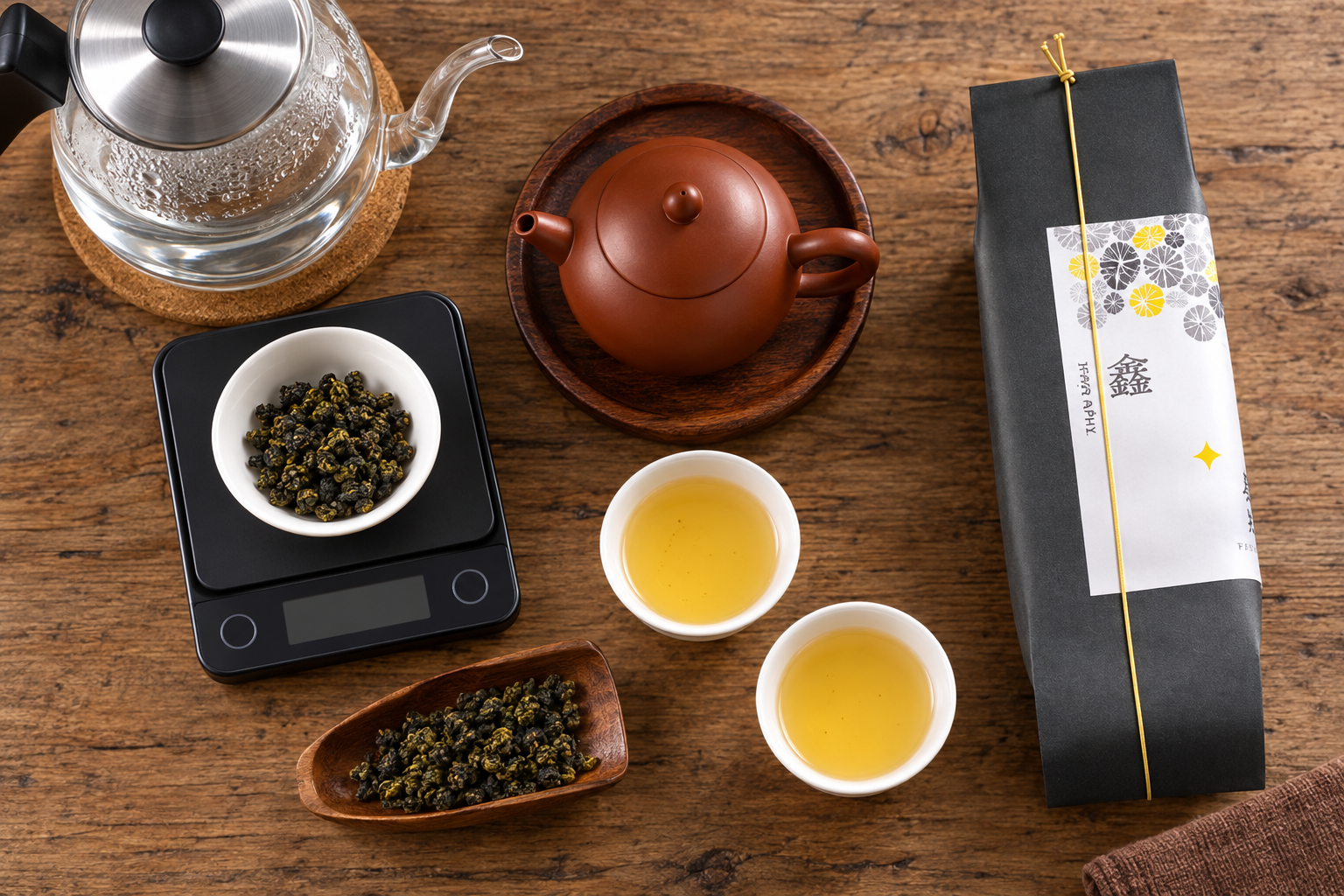
- Small teapot: start with 5 g of leaf to 75-85 ml of water.
- Large cup: start with 6-7 g to 300 ml when using the product format designed for a longer steep.
- First infusion: about 60 seconds in a small teapot, or 6-7 minutes for the large-cup method.
- Re-steeping: pour the leaves dry between infusions and add time gradually.
These are starting points, not rigid rules. Always follow the directions on the specific TEAGRAPHY product page when they differ.
Method 1: small teapot, multiple infusions
This method suits TEAGRAPHY's Four Seasons Tea Gathering 50 g loose-leaf cans and lets you follow how the aroma changes over several rounds.
- Heat the water to 100°C. Freshly boiled water helps tightly rolled leaves open.
- Warm the teapot and cups. Rinse them with hot water, then discard it. A warm vessel keeps the first infusion stable.
- Add 5 g of tea to a 75-85 ml pot. Leave space for the leaves to expand.
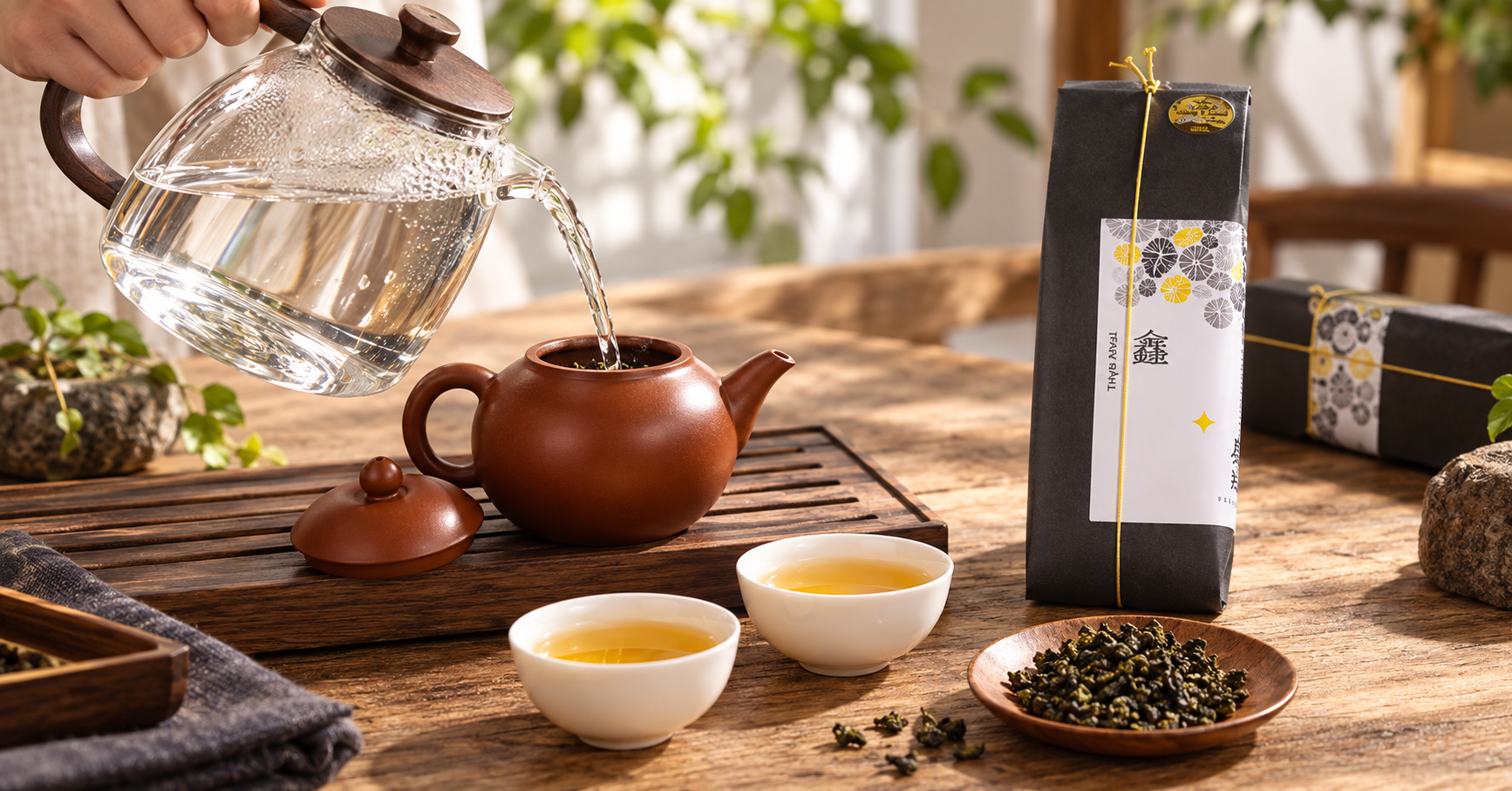
- Pour and cover. Add hot water evenly and start the timer.
- Steep for about 60 seconds. Pour every drop into the cups so the leaves do not continue extracting between rounds.
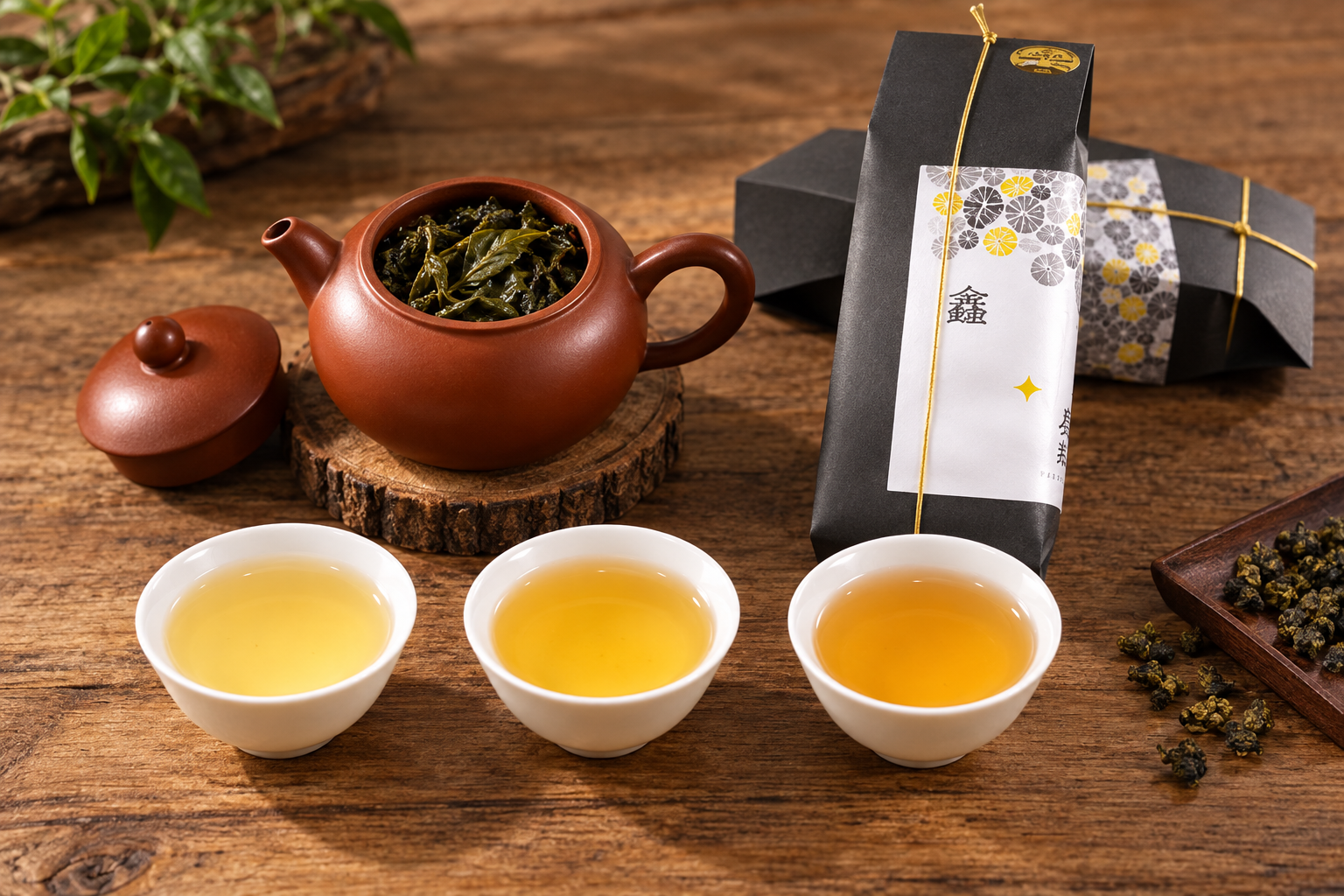
- Repeat and adjust. A second 60-second infusion is a useful baseline. Add roughly 20 seconds for the third, fourth and fifth rounds, then about 30 seconds for later rounds.
Good leaves can often be enjoyed across six or seven infusions, but let flavour decide. Stop when the liquor becomes thin rather than chasing a number.
Method 2: one large cup
For a product intended for a generous mug or sharing pot, use 6-7 g of tea with 300 ml of water at 95-100°C and steep for 6-7 minutes. This longer method is simple and gives rolled leaves time to open in a larger volume of water.
- Preheat the mug or pot with hot water.
- Add the measured tea and 300 ml of water.
- Cover and steep for 6-7 minutes.
- Strain completely before drinking.
The Cangui Guyun Xin format is a natural fit for this easy approach. Check its current product instructions before brewing.
Should you rinse oolong tea?
A quick rinse is optional, not compulsory. If you use one, pour hot water over the leaves and discard it immediately. The rinse warms the leaf and begins opening a tightly rolled tea, but a long rinse can remove aroma from the first proper cup.
If the tea is clean, well stored and you prefer to taste every stage, simply skip the rinse and make the first infusion slightly longer.
How to keep tea from tasting bitter or too strong
Bitterness is usually a ratio or timing problem before it is a tea problem. Correct only one variable at a time:
- Too strong: shorten the next infusion or use a little more water.
- Too weak: add 10-20 seconds before adding more leaf.
- Flat aroma: make sure the vessel was warm and the water was hot enough.
- Dry finish: pour completely and do not leave the leaves sitting in water between rounds.
Do not try to fix every issue by lowering the water temperature. Charcoal-roasted oolong often needs heat to reveal its body; time and ratio are usually the easier controls.
How to re-steep Taiwanese oolong
Keep the wet leaves in the pot, but drain them fully after every infusion. For a small teapot, repeat the second infusion at about the same time as the first, then lengthen later rounds. The leaves will expand, the roast will soften and the tea's floral, fruit or milky character may become clearer.
Smell the lid and the empty cup as well as the liquor. With charcoal-roasted tea, part of the experience is the aroma that returns after the sip and remains in the cup.
Teapot, mug or tea bag?
A small clay or porcelain teapot gives the most control and is ideal for repeated infusions. A mug with a large infuser basket is easier at work and still gives the leaves space. A three-dimensional tea bag is the most convenient option for travel or a quick cup.
Choose the format that matches your routine. Precision helps, but a method you will actually repeat is more valuable than equipment you rarely use. Explore loose-leaf and tea-bag formats in the TEAGRAPHY shop.
Water and storage matter too
Use fresh water with a clean taste. Water that has been boiled repeatedly can make the cup feel dull. After opening the tea, press out excess air where possible, seal it well and keep it away from heat, humidity, light and strong odours.
Brewing Taiwanese oolong is a process of noticing. Begin with the recipe, taste the result and change one detail on the next round. Within a few cups, the method becomes your own.